

Introduction
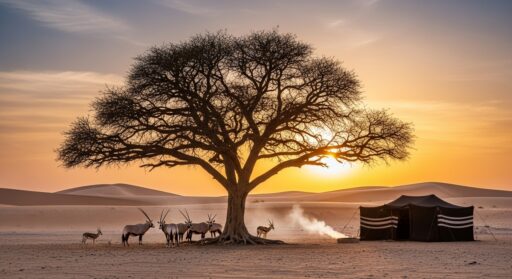
The Rub’ al Khali, known as the Empty Quarter, is more than a desert; it is a realm of myth, extremity, and profound beauty. Spanning parts of the UAE, Saudi Arabia, Oman, and Yemen, it is the largest continuous sand desert on Earth—a sea of dunes so vast it dwarfs human comprehension. For centuries, its hyper-arid, unforgiving interior was a barrier that few could cross, earning its name. Yet, for the Bedouin and the modern UAE, it is not empty at all, but a place of deep cultural significance, geological wonder, and a testing ground for human resilience.
A Landscape of Epic Scale and Beauty
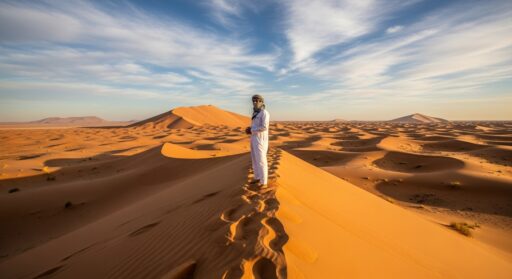
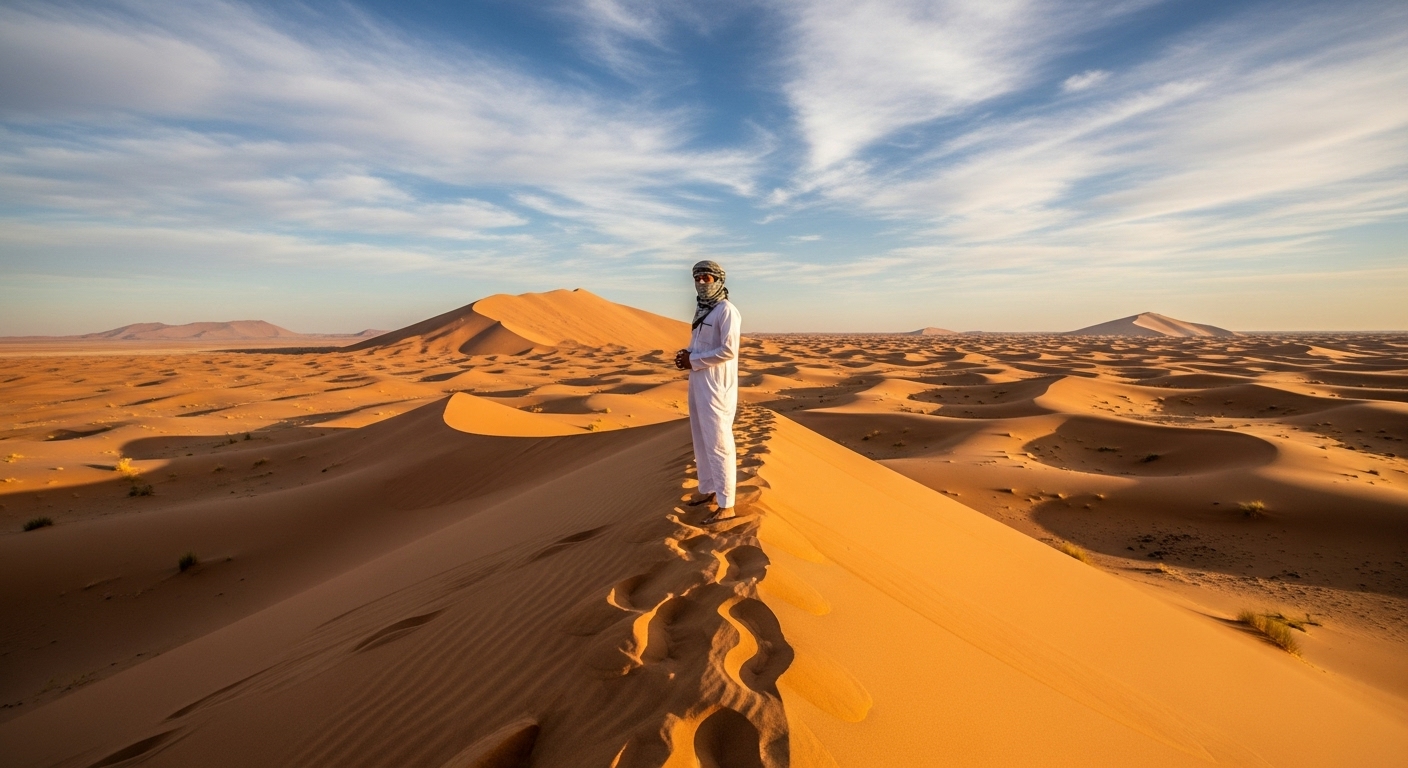
The scale of the Empty Quarter is its defining feature. Its dunes, some reaching heights of 250 meters (800 feet), are among the tallest in the world. They are not static mountains of sand but dynamic, shifting sculptures shaped by the wind. The dunes take on various forms, from the massive, complex star dunes around Liwa to the long, parallel linear dunes (seif dunes) found elsewhere. The color palette is mesmerizing, shifting from vibrant orange and deep red at dawn and dusk to a blinding white-yellow at midday, a result of feldspar and iron oxide coating the quartz grains.
The Bedouin and the Empty Quarter: Masters of Survival
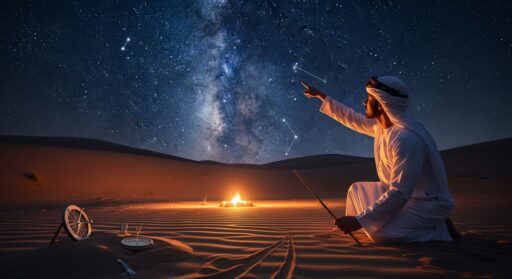
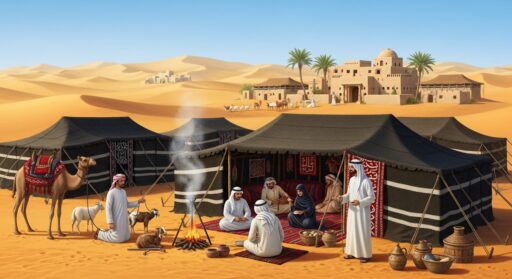
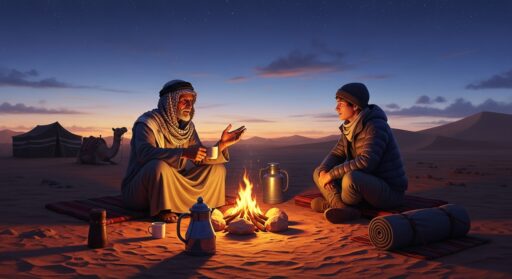
To the Bedouin tribes, such as the Bani Yas, Manasir, and Awamir, the Empty Quarter was not a void but a home. Their survival was a masterclass in adaptation. They possessed an encyclopedic knowledge of the desert, reading the stars for navigation, tracking scarce rainfall to find patches of desert grass (ashib), and knowing the location of every hidden well (bir). The camel was their indispensable partner, providing transport, milk, and meat. The Bedouin developed a complex social structure and a code of honor based on hospitality (diyafa) and cooperation, essential for survival in such a harsh environment.
The Modern Exploration: From Thesiger to Oil
For the outside world, the Empty Quarter remained one of the last blank spots on the map until the mid-20th century. The legendary British explorer Wilfred Thesiger made two famous crossings in the 1940s, accompanied by Bedouin guides. He chronicled the journey in his classic book, Arabian Sands, painting a portrait of a harsh, beautiful, and vanishing way of life. Soon after, the quest for oil began. Geologists and surveyors, often using Bedouin guides themselves, ventured into the desert, leading to the discovery of the vast oil reserves that would transform the region and fund the modern UAE.
The Liwa Oasis: A Green Crescent on the Edge
The Liwa Oasis, an arc of settlements on the northern edge of the Empty Quarter in the UAE, is a vital lifeline. It is the historical homeland of the Bani Yas confederation, the tribe of the Al Nahyan ruling family of Abu Dhabi. Here, vast plantations of date palms flourish, sustained by fossil water aquifers. The oasis has been inhabited for thousands of years and served as a seasonal base for Bedouin tribes. Today, it is also a destination for tourism, with luxury resorts offering a base for desert safaris and a chance to witness the breathtaking dunes of the Empty Quarter up close.
Conclusion: A Symbol of Endurance and Ambition
The Empty Quarter remains a powerful symbol in the Emirati consciousness. It represents the nation’s roots—the harsh environment that forged the resilience, patience, and deep knowledge that characterize the Emirati people. Today, it is a place of national pride, adventure, and energy wealth. The ability to not only survive in this landscape but to thrive, building modern infrastructure and even hosting motorsport events like the Abu Dhabi Desert Challenge within it, speaks to the ambitious spirit that has come to define the UAE. The Rub’ al Khali is empty only to those who do not know how to see its stories, its beauty, and its enduring challenge.