

Introduction
Before the discovery of oil brought permanent cities and modern infrastructure, life in the UAE was fundamentally shaped by the rhythm of the desert. The population was divided between the nomadic Bedouin (Badu) of the interior and the more settled people (Hadhar) of the coast and oases. For the Bedouin, life was a cycle of movement, their existence orchestrated around the search for water and pasture. Their material culture—from the tents they lived in to the food they ate—was a masterpiece of adaptation, perfectly designed for a life of mobility and survival in one of Earth’s harshest environments.
The Bait Al Sha’ar: The Mobile Desert Home
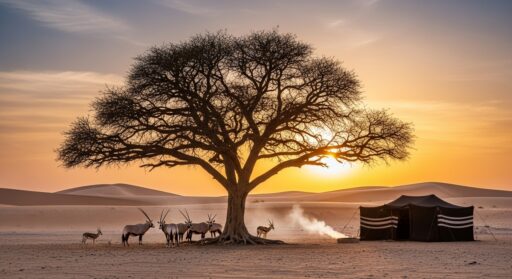
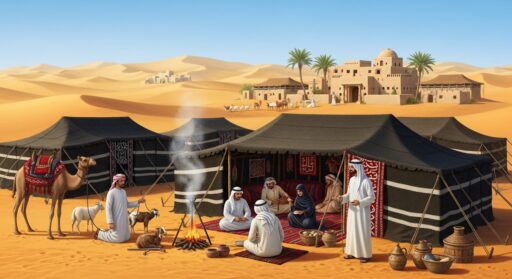
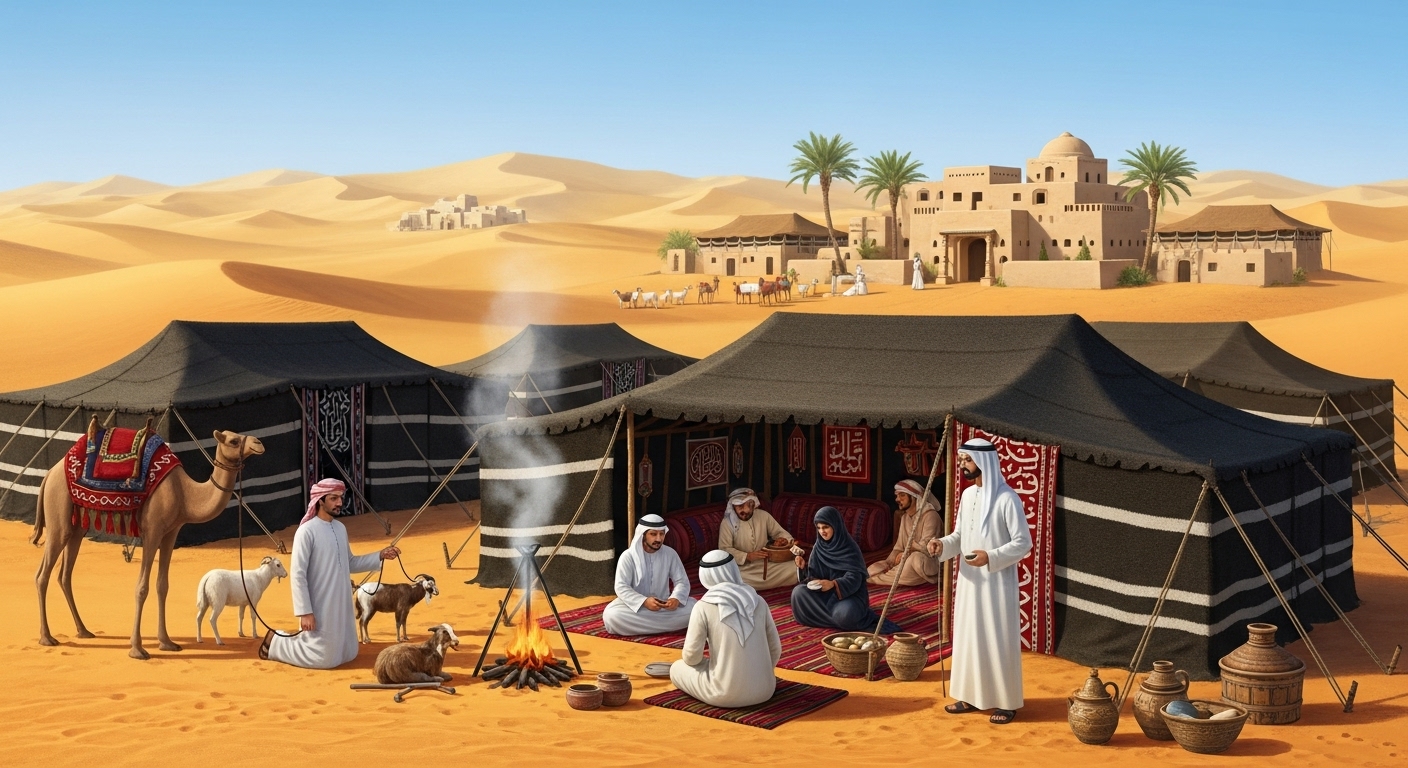
The Bedouin home was the bait al sha’ar (“house of hair”), a tent woven from the wool of goats and sheep. This design was ingeniously suited to the desert climate. The black goat hair was porous, allowing smoke from the cooking fire to escape and breezes to filter through, while also contracting when it rained, becoming waterproof. The tent was divided by a partition (ma’nad); one side was for the men and receiving guests, the other was the private family area for women and children. Easily dismantled, loaded onto camels, and reassembled, the bait al sha’ar was a symbol of a life in harmony with the land’s demands.
The Rhythm of Transhumance: Following the Rains
The Bedouin did not wander aimlessly; they practiced transhumance, a seasonal migration pattern dictated by the scarce and sporadic rainfall. Their year was split between the shitwi (winter) and seifi (summer) grazing areas. After winter rains, they would move into the desert interior where temporary patches of grass (ashib) sprouted. As the summer heat intensified and water sources dried up, they would migrate back towards the coastal plains or permanent oases. This deep knowledge of the land, passed down through generations, was essential for the survival of their herds.
A Spartan yet Sufficient Diet
The Bedouin diet was simple, nutritious, and entirely derived from their animals and the desert. The cornerstone was the date, a dense source of energy and nutrients. Camel milk was a staple drink, consumed fresh or soured (laban). Meat from sheep, goats, or camels was a luxury, typically reserved for feasts or special occasions. When meat was scarce, they relied on bread baked in simple sand ovens and whatever wild plants they could forage. Every part of the animal was used, reflecting a zero-waste philosophy born of necessity.
Oasis Life: The Settled Counterpart
In contrast to the nomadic Bedouin, the Hadhar lived a settled life in oases and coastal villages. Life in an oasis, like Al Ain or Liwa, revolved around the date palm. The falaj irrigation system channeled water to the palm groves, which provided dates, building material (trunks and fronds), and shade for growing other crops like alfalfa, citrus, and mangoes. This settled life allowed for the development of crafts like pottery and weaving, and the establishment of permanent markets (souqs). The oasis was a vital hub where the Bedouin and the settled communities would meet, trade, and interact.
Conclusion: The Foundation of a Culture
The traditional desert camp life was not one of mere hardship, but of profound order, skill, and community. It was a life that demanded a deep, intimate knowledge of the environment, resilience in the face of adversity, and unwavering cooperation within the tribe. The skills of navigation, animal husbandry, and tent-making were as complex as any modern profession. While the bait al sha’ar has largely been replaced by concrete houses, the values, the social structures, and the profound connection to the desert that were forged in this lifestyle remain the foundational pillars of Emirati national identity.