



Introduction
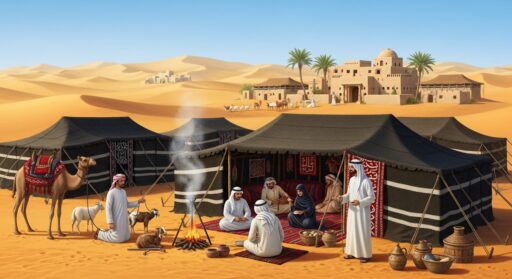
The harsh and unforgiving environment of the Arabian desert forged a unique and powerful moral code among its Bedouin inhabitants—a set of unwritten laws that governed every aspect of life. This code, born from the absolute necessity of cooperation for survival, was built on a sacred trinity of values: survival skills, extreme hospitality, and unwavering personal honor. While the nomadic lifestyle has largely faded, this Bedouin ethos remains the ethical bedrock of Emirati society, deeply influencing its culture, social interactions, and national character.
The Imperative of Hospitality (Diyafa)
In a landscape where a traveler’s life depended on finding water and shelter, hospitality was not a mere social grace; it was a sacred duty. The rule was absolute: a guest, even a complete stranger or an enemy, must be welcomed, fed, and protected for three days before any questions could be asked. This tradition of diyafa is embodied in the serving of Gahwa (Arabic coffee) and dates, a ritual that continues to this day in every Emirati home and majlis. The host’s generosity was a measure of their honor, and to refuse hospitality was a profound disgrace. This value explains the deep-seated generosity that remains a hallmark of Emirati culture.
The Cultivation of Courage and Resilience (Shuja’a)
Life in the desert was a constant test of courage (shuja’a) and resilience (sabr). Courage was not just bravery in battle but the fortitude to face starvation, thirst, and devastating sandstorms. It was the courage to embark on long, perilous journeys with no guarantee of return. Resilience, or patience, was the ability to endure these hardships without complaint, trusting in God and one’s own abilities. This forged a character that was stoic, pragmatic, and incredibly tough, a spirit that was later channeled into the monumental task of building a modern nation from the desert.
The Centrality of Honor and Reputation (Sharaf)
For the Bedouin, a man’s honor (sharaf) was his most valuable possession. It was intricately tied to his family and tribe. Honor was maintained through several key actions: keeping one’s word, fulfilling promises, protecting the weak, and fiercely defending the tribe’s reputation. A man’s honor could be damaged by lying, stealing, or showing cowardice. The concept of collective responsibility meant that an insult or injury to one member was an affront to the entire tribe, which could lead to long-standing blood feuds. This created a society where trust and reputation were paramount.
The Role of the Majlis and Collective Decision-Making
The majlis (a “place of sitting”) was the physical and social institution where this code was enacted and enforced. It was an open, democratic forum where every male member of the tribe had the right to speak. Disputes were settled here, news was shared, and collective decisions about migration, war, and peace were made. The elder’s wisdom was respected, but decisions were often reached by consensus. The majlis was the school where young men learned the tribe’s history, poetry, and the complex rules of the moral code.
Conclusion: The Enduring Desert Legacy
The transition from nomadic life to settled modernity in the UAE happened with breathtaking speed, but the Bedouin code did not disappear. It was translated. The value of hospitality now defines the nation’s welcome to the world. The resilience forged in the desert fueled the ambitious projects of nation-building. The emphasis on honor and keeping one’s word underpins business and political life. The tradition of the majlis continues in the offices of rulers and the homes of citizens. The Bedouin code, therefore, is not a relic of the past but the living soul of the UAE, a timeless desert wisdom that continues to guide the nation in the 21st century.