

Introduction
In the vast, arid landscapes of the UAE, one tree stands as a powerful emblem of life, resilience, and cultural memory: the Ghaf (Prosopis cineraria). This hardy, evergreen tree, with its deep roots and spreading canopy, is a keystone species of the desert ecosystem and was officially declared the national tree of the UAE in 2008. More than just a plant, the Ghaf is a living symbol of the nation’s identity, representing the ability to not only survive in a harsh environment but to provide sustenance and shelter for an entire community, both human and animal.
The Biology of Resilience: A Master of Desert Survival
The Ghaf tree is a marvel of evolutionary adaptation. Its survival strategy is two-fold, focusing on both seeking water and conserving it. Its root system is phenomenally deep, capable of plunging over 30 meters (100 feet) into the soil to tap into hidden groundwater reserves, making it independent of scarce rainfall. Above ground, its small, feathery leaves are designed to minimize water loss through transpiration. It can remain green year-round, a rare and vital sight in the desert, providing a critical food source—its nutritious pods and leaves—for wildlife and livestock even in the driest months.
A Cultural and Historical Lifeline
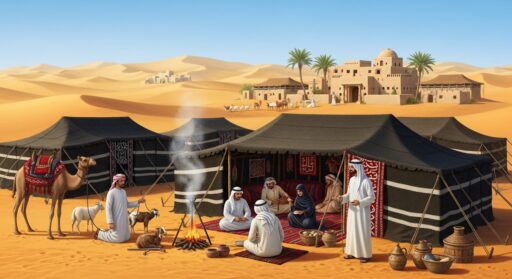
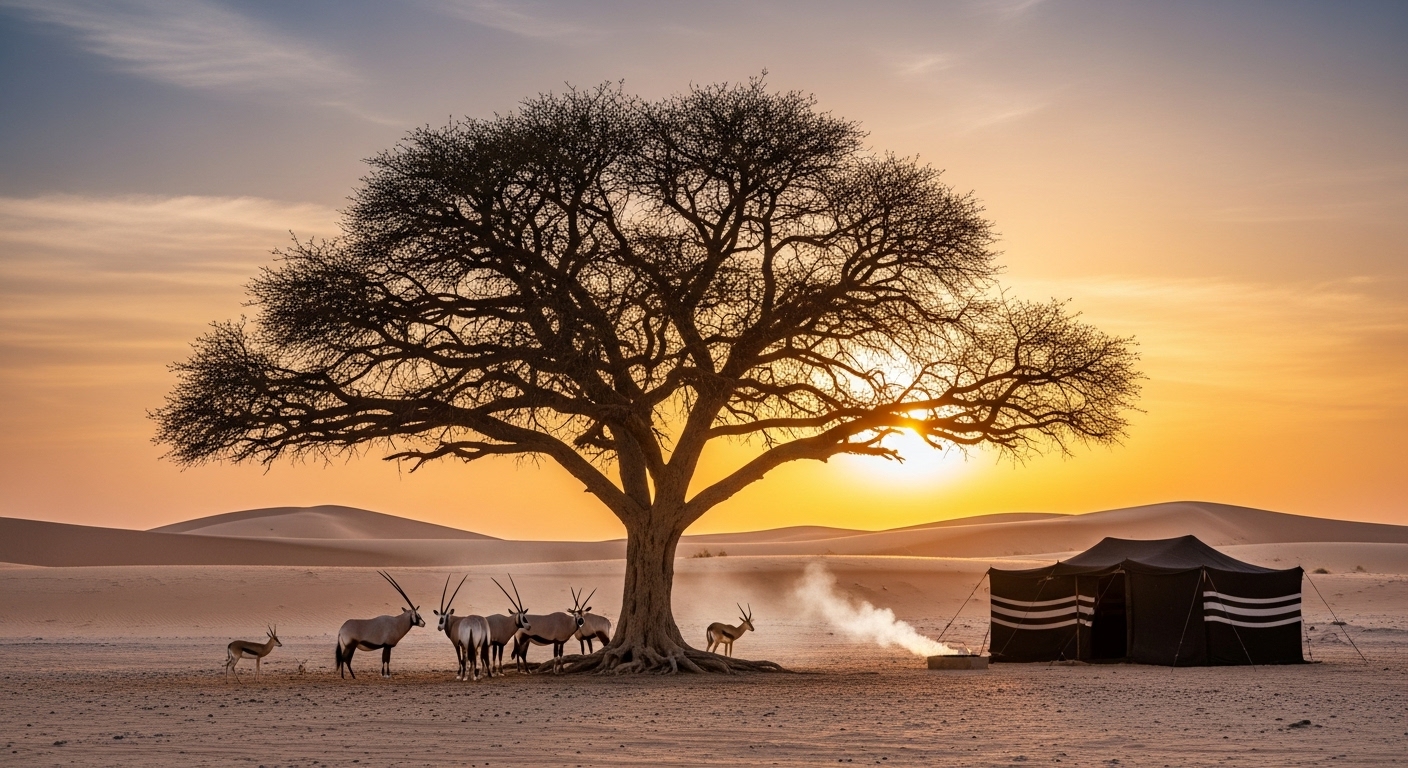
For the Bedouin, the Ghaf was a tree of life. Its presence signaled the possibility of life, indicating the presence of water below. It provided essential shade for people and animals, its wood was used for fuel and building materials, and its pods and leaves served as fodder for camels, goats, and sheep. The tree was often a central meeting point, a natural majlis where travelers would gather, stories were shared, and disputes were settled under its generous branches. This historical role has cemented its place in the national psyche as a symbol of generosity, stability, and community.
The Ghaf as a Keystone Species: An Ecosystem in Itself
The importance of the Ghaf extends far beyond its human uses. It is a “keystone species,” meaning the entire desert ecosystem around it depends on its presence. Its canopy provides a critical microhabitat, offering shade and shelter for birds like the brown-necked raven and various reptiles. Its flowers are a source of nectar for insects, and its pods are eaten by numerous animals, from gazelles to insects, which in turn support larger predators. The Ghaf tree is not just a tree; it is a bustling, self-contained oasis of biodiversity.
Conservation and the “Ghaf Majlis”
Recognizing its ecological and cultural value, the UAE has taken significant steps to protect the Ghaf. It is illegal to cut down a Ghaf tree without a permit. The “Ghaf Majlis” initiative, for example, involves planting Ghaf trees in public spaces to recreate the traditional gathering spots and promote community cohesion. Furthermore, the late Sheikh Zayed bin Sultan Al Nahyan integrated the Ghaf into his ambitious afforestation projects, understanding that protecting native species was key to combating desertification and preserving the nation’s natural heritage.
Conclusion: The Living Spirit of the UAE
The Ghaf tree is a perfect metaphor for the United Arab Emirates. Its deep roots represent a connection to a harsh but cherished land. Its resilient nature mirrors the perseverance of the people who have thrived here for centuries. Its generous canopy, offering shelter and sustenance to all, reflects the core values of hospitality and community that are central to Emirati culture. As the national tree, the Ghaf stands as a living, growing testament to the nation’s past, a vital component of its present ecosystem, and a promise of a green and sustainable future. To see a Ghaf tree standing alone in the desert is to witness the very spirit of the UAE—proud, resilient, and life-giving.